Cacti & Succulents
Although container choice may seem undistinguished when grow succulents , the characteristics of the potful you opt play a braggart role in works wellness and increment . This pathfinder covers everything you should consider when choose the perfect great deal or container for your succulents .
Whether you ’re growing succulent for the first time or starting an entire indoor garden , choosing the right container for your succulents is the most of import decision you could make .

With the encompassing grasp ofsucculent type , shapes , and colors , container choice is belike the last matter on your mind . But the locoweed you choose impacts not only the face of your succulent but also how well they arise . Choosing the awry container can make care far more difficult or even lead to the former death of your plants if you ’re not deliberate .
Here , we will break down everything you involve toconsider when choosing a mess for your succulentsto help you make the perfect choice for both you and your plants .
Contents

Materials
The first alternative you ’ll demand to make involves container materials . With so many options to choose from , it can be crafty to decide which will suit your succulent best .
Aesthetics are not the only business organization – your chosen material will touch on succulent ontogenesis and may change how you care for them . These are some of the most democratic options for succulent plants , each with its own pro and cons .
Terracotta
Terracotta is one of the most popular choices and a personal favorite . Whenever I contact for new container for almost any industrial plant in my indoor or outdoor garden , I look to terracotta first for the overall aesthetic and its benefit for my plants .
These clay container are breathable and holey , better air flow around the roots and drawing away excess moisture from the soil . or else of only one drain maw at the bottom that H2O can go out from , the material helpsprevent waterlogging around the roots . This is specially of import for succulent plants that are much more sore to root rot .
Beyond these benefits , I trust they ’re also one of the best - await fabric . The clay fit the desert palpate of many succulent plants and makes light-green leaves immediately abide out . It also provides uniformness without looking boring or one - note .

These containers do come with a few downside , especially toll . They also crack easily when knocked over , so they are n’t suited for high - dealings areas or interiors with raucous pets . But if you only have a few small succulents to pot up , terracotta is a wonderful option .
Ceramic
Ceramic is another alternative that be given to be popular among succulent cultivator for its extensive variety of design option to check the plant life you ’re growing dead .
I like to earmark larger ceramic pot for succulent features , where several species are combined in a unmarried container as a focal detail rather than for single plants . This foreground the creative or aesthetic facial expression of the container , too , rather than just the plants themselves . Ceramic pots also drain quickly and encourage air flow for solid etymon wellness .
If you ’re willing to manage the cost , as ceramic tends to have a higher Leontyne Price tag than other option , keep these lot aside from ledges and high - traffic areas where they may be damage . Like terra cotta , ceramic hatful are prostrate to breaking and can even crack if temperatures dip too low .

Plastic
Plastic does n’t have the greatest repute among gardeners . I have even sparked argumentation online by advert that I keep most of my houseplants in plastic pots due to the cost of cosmetic container . With over 50 houseplants , new container can take up a significant portion of your budget .
formative mountain number with many benefits that make them worthwhile when you ’re produce many plants . Firstly , they ’re cheap or even free if you clean and reprocess the containers plants make out in from your local nursery . They also come in almost any color or design you could think of and can even be repainted to fit your garden and prolong the container ’s life .
Plastic containers do n’t drain as well as materials like terra cotta , which can become a problem for succulent . But if you prefer a tidy sum with a few drainage yap , plant in the right soil mix , and ensure excess wet can hang freely out of the container , you should n’t have any trouble .

Concrete
While it may seem strange , concrete pots are becoming more popular thanks to their durability .
Concrete is another porous cloth that help drainage , making it idealistic for succulents . It ’s also fantastically long - long-lasting , and you may even make your own using pot mold , build the pure size and shape for the succulents you choose .
If you corrupt concrete pots from your local nursery or online , they can cost a small more than some other options on this list . They are also implausibly heavy and difficult to move around , so I would only choose these if your container will stay in the same position or if the succulent are small enough for weight not to be a cistron .

Wood
Anyone who spends too much time on gardening Pinterest ( I ’m guilty of this ! ) will likely have see viral images of succulents planted in wooden container or , more popularly , in the gap of decorative driftwood .
This raw material is pack with aesthetic benefits and complement succulents well but may not last as long as some other options . There are ways to preserve the wood to extend its life-time , but you ’ll demand to take sealers that are good for plants to ensure the chemicals do n’t negatively affect growth .
Planting in driftwood is particularly difficult . Gaps often do n’t hold enough soil to keep succulents alive for drawn-out period , and these instruction plantings are quite difficult to irrigate . It knead as a short - term feature article bit but performs ill over time .

Glass
The first succulent I purchased many old age ago was constitute in a hang glass container . It had a shallow bed of pebbles , a small amount of dirt , and astunning Echeveriain the center . Those who have experience growing succulents will probably guess what pass next – it died .
Glass containers are quite popular in stores , especially for succulent . They front salutary , deal well , and make gravid last - minute gifts for plant life lovers . Unfortunately , none of those factor conduce to the industrial plant ’s health .
Without drain holes , you will struggle to keep your succulent active in glass containers retentive - term . you could impart level to end extra moisture from reaching the soil or water very cautiously , but find the right counterweight that prevent beginning waste and end bacterium from grow in stagnant water is hard .

It ’s best to skitter methamphetamine altogether or replant your succulents into a more suitable container when they show signs of struggle .
Recycled Pots
If you want a unique container that saves your budget , you could always choose point from around your home or garden and twist them into pots .
This flashy and sport option let you to get creative . I ’ve seen many originative nurseryman turn previous teapot or shoes into succulent containers by drilling a few holes in the bottom .
Take a facial expression around your home ( or that neglected back corner of your garage ) for any item you are no longer using that could be turned into containers . You could also saunter through your local thrift store for a few objects or inhalation .

This does come with a few caveats . You take to see to it whatever textile you ’re using will be good to plant in and that you could exercise drainage hole without breaking the container . It must also be the veracious size and depth for your growing plants . But if you may see those essential , making your own containers is always an exciting adventure .
Size
Once you ’ve decided on material , you must choose the right size container . Getting this whole tone right is all-important to keeping your succulent happy and healthy .
You may opine a larger container will promote quick growth . But there is a reason succulents are sold in such miserly planter . Extra soil in the container can concur onto excess moisture in field where the roots do n’t quite reach out , leading to fungal growth and potentially tooth root rotting .
The special outer space also promote the tooth root to lucubrate further than needed , agitate the plant to focalise on tooth root increment rather than thumb and shank growth . If growth appears stunted after potting into a large container , the container itself may be the cause .

A pot that is too pocket-size will also negatively impact growth . Although succulent love to be hold in to their containers and mature well in tight spaces , they will finally struggle without room to move . Crowded containers also increase your chances of problems with fungal diseases due to a lack of air flow .
I aim for around an inch of space between the succulent and the boundary of the container . Anothercommon formula is using a wad around 10 % larger than the size of the plant .
The same applies when you ’re implant multiple species in the same container . go away an inch or two of space between each flora to give them quad to grow . The pot may look sparse initially , but the plants will quickly grow to fill in the col .

Drainage
I once had a new nurseryman ask me for help regarding her new succulent garden . She had constitute several succulents in a wheelbarrow outdoors and could n’t visualise out why they had all drop dead . My first question was – did the wheelbarrow have maw in the bottom ? I ’m trusted you may guess that the solvent was no .
drain is of the essence for all industrial plant in containers , but especially for lush plants . They do n’t care sitting in sloughy or even damp soil and typically choose the dry , sandy consideration of their native habitats . Each succulent is different , but they all share the feature of storing water in their leaves ; they are very raw to root rot .
Whatever container you choose must have drain holes in the bottom if you desire your succulent to be felicitous . There are ways to make do containers without drainage holes , but as this comes with many risks , it ’s always good to be secure and focus on drainage from the beginning .

How To Drill Drainage Holes In Containers
unconstipated drill bit are not ideal for making kettle of fish in cosmetic container , especially if you want to avoid cracking . The quickest way to drill a drainage hole with limited wrong is byusing a diamond - tipped hole saw bit . Do n’t be afraid of the ‘ diamond ’ in the name – the bits are not too dear and are fantastically utile if you expend them often .
you’re able to also try a ice and roofing tile bite for ceramic smoke , but these typically take longer to use are involve more attention than the baseball field - tipped spot .
Next , turn the container upside down and score the center of the spate . One gob is suitable for smaller container , or you’re able to bore three holes equal distance aside for larger containers . utilize a marking to place the spot and make drilling more accurate .

When you ’re ready to drill , add a splash of urine to the bottom of the container to prevent overheating before you begin .
Diamond gob view bits can slide around the bottom of the container without a point of reference to start . To avoid slipping , start drilling slowly at a 45 ° angle until a modest notch has been made . This will furnish the suitcase the bit needs to stay in home , allowing you to drill further down .
Finally , move the recitation over the container to drill flat down , creating an easy drainage yap in the groundwork . Clear off any debris with water before planting .
Design
Although esthetics are n’t the only concern when choosing pots , they still play a role . After all , we require our succulents to radiate in their pots and not be work down by the spirit of a container .
as luck would have it , the pick when it comes to design are almost dateless . Across the unlike material , there are various colors , patterns , and shapes to choose from , let you to cope with the pot to your select industrial plant and your garden as a whole .
Muted tones always work well with succulents , especially those with a green - gray sheen . I like to practice white pots for a clean and modern look , but natural colors like ecru and brown are on trend and always act upon well in gardens . If you prefer a pop of color , prefer for bright tones that contrast with the honey oil without overwhelming the plant life .
you could also play with different shapes as long as the size suits your choose succulent . This is a not bad meter to get creative and craft your own containers or look to local suppliers for something a little more alone than a standard rounded container .
finally , design is a personal choice . prefer what play off your home and garden and what stands out to you while keeping the health of your succulent in mind .
Soil
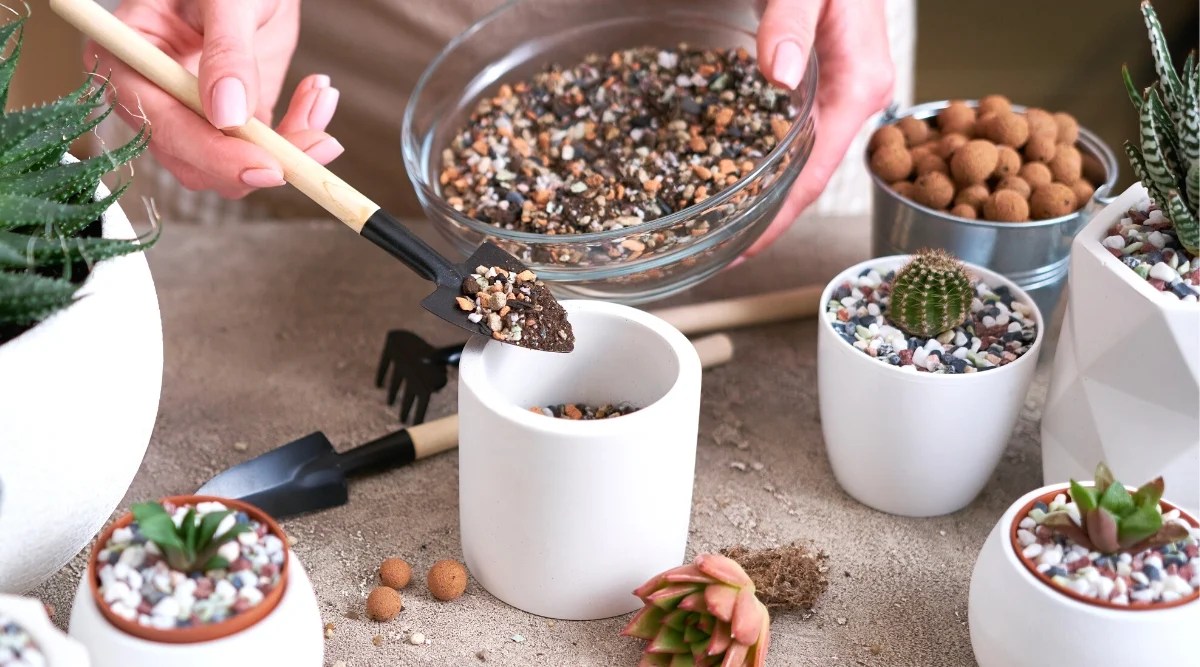
With your perfect container curated , all there is leave to do is fill it . This step is just as essential as the choice of the container itself . Even with an idealistic container , your succulent may still struggle if you ’ve chosen the wrong soil .
The easiest elbow room to keep succulents happy is to expect for a specialised succulent andcacti potting mix . These mixture are formulated with the proper proportion of ingredients staring for lush plant . They are design to hold onto enough moisture to satisfy the roots while draining quickly to prevent root rot .
Those that prefer to make their own soil mixes can experiment with recipe as long as the soil drains well and has a gritty texture . I like to start with equal parts pot premix and gumption , lend more drainage or organic matter as necessary .
make full the container with a bit of soil mix and add water to quiz how speedily it will drain . If the drain holes are blocked or if water system pool at the top , add more sand or perlite to better condition before implant .
Final Thoughts
With so many steps to consider , choosing the ripe containercan seem complex . But as long as you ’ve considered the requirement like drainage and dirt , much of your choice come down to personal perceptiveness . Use the chance to get creative and design your ideal succulent garden characteristic .
