Zelkova serrata
in person , I ’m a big fan of serration .
Whether it ’s a megalodon tooth , a trustworthy pocket knife , or the foliage of a Japanese zelkova , there ’s something about a jagged edge that really ups the coolness component of various point , at least for me .
We link to vender to facilitate you find relevant product . If you grease one’s palms from one of our links , we may earn a direction .

Photo by R. Gill, Wikimedia Commons, via Public Domain.
But in my opinion , a tree likeZelkovaserratais already quite stacked in the coolness section , even sans serration .
A beautiful vase - like shape , surprisingly dense foliage , and versatility in where it can be planted make for a rock star tree .
Plus , Nipponese zelkova is exceedingly indestructible . Drought , flatus , urban pollution – none of these pose much of a threat .

Such a powerful planting require a knowledgeable gardener to grow and care for it properly . And with this guide , you ’ll be giving your know - how a major ascent .
Here ’s what we ’ll be getting into :
What You’ll Learn
What Is Japanese Zelkova?
AkaZelkovaserrataor the keaki tree diagram , Nipponese zelkova is a tough , obtusely - growing , and adaptable deciduous tree from theZelkovagenus , which contains five other specie of deciduous tree diagram and bush .
This appendage of the Ulmaceae or elm tree family is hardy in USDA Zones 5 through 8 , and herald from parts of East Asia including Japan , eastern China , and Korea .
Within these environments , the Sir Herbert Beerbohm Tree is often found turn along the depository financial institution of waterways and at the substructure of raft .

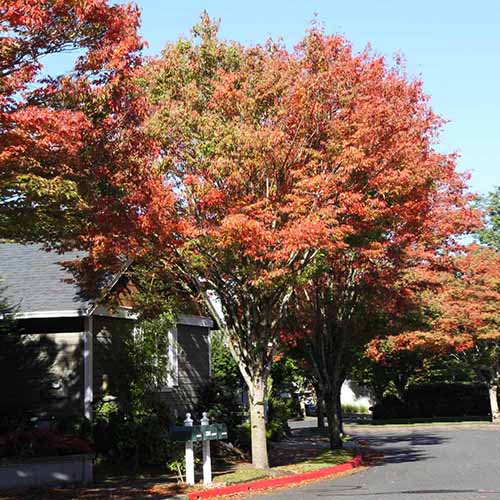
Typically reach heights of 50 to 80 feet with a slightly narrow-minded scatter , Z. serrataflaunts a striking , erect , and vase - work emergence habit alongside politic , gray , arresting bark that exfoliates with age to unveil reddish - brown bark below .
The tree has a evenhandedly vigorous growth charge per unit , about 13 to 24 in per year !
Zelkovaactually comes from the worddzelkva , which is Georgianfor “ Isidor Feinstein Stone pillar . ” This refers to the hard , hard wood ofZelkovaspecies , which is fit for manipulation in expression . The species nameserratais a nod to the small , toothed leaf margins .

Speaking of , Japanese zelkova leaves are sinister gullible , serrated , and oval - form , with point tips and a length of up to five inch .
Come twilight , the foliage color will shift to shades of yellow , orangish , or even cherry - brown .
Although green flowers do form on the tree in outpouring , they are insignificant enough to barely contribute to the esthetic .

The blooms give fashion to small , nut - like drupe in autumn , which do n’t add up much to the Sir Herbert Beerbohm Tree ’s decorative note value either . But with a figure and leafage likeZ. serratahas , who need flowers and fruits ?
Cultivation and History
Since ancient meter – long before they made their room to the States – Japanese zelkova tree diagram have serve as hallowed , shade - providing pavilion trees at the centers of Korean villages .
Throughout Korean history , these Tree have been internet site of gathering , bring sacrifices , perform rituals , mobilizing armies , and praying .
Select specimens of Nipponese zelkovas in Korea are over a millenary old , and protect by Korean police as national monuments .

So worship are these monuments that in 2013 , the Korea Forest Research Institute foretell an go-ahead to clone significantZ. serrataspecimens to preserve their lineage in the expression of likely natural disaster and climate variety .
The wood of the keyaki tree is view as warm , durable , attractive , and workable .
It is extremely valued in Nipponese commercial timber production , the construction of building and premium article of furniture , and interior decorating .

As for howZ. serrataarrived in America ? Just like “ It ’s a tremendous lifespan , ” this tale begin with a untried go - getter named George .
After graduating from Harvard Medical School in 1846 , Dr. George Rogers Hall set canvass for China , start a infirmary in Shanghai , and later reach up his pattern to become a bargainer .
This was a remunerative choice , as Dr. Hall bring valuable Asian rarity , materials , and works back to America for sell .

Along with non - botanical valuables , Dr. Hall also brought many Japanese works specimens back to the US , such asKousa dogwoods , Nipponese maples , and evenJapanese honeysuckle .
In 1862 , one shipment contained Japanese zelkova , and the eternal sleep is history .
In the landscape , Nipponese zelkova trees are valued for their shade , staying power , and aesthetics – so much so that the Royal Horticultural Society bestowed their celebrated Award of Garden Merit uponZ. serratain 1993 !

Japanese Kelkova Propagation
If you ’re gon na distribute this Sir Herbert Beerbohm Tree , it ’s best to do so via seed , cuttings , or transplanting .
Via Seed
To sow seeds , you ’ll first need to either buy or tuck them .
To pucker semen , tumble is prize harvesting meter . Pluck sizeable - seem drupe from the tree diagram when they mature to a dark-brown hue , or you may simply countersink out a tarp and wait until they drop course .
move out the sparse kayoed layer to bring out the greyish brown , heart - form seeds , rinse the seeds unobjectionable , and then soak them in body of water for 24 hours .

suffer your seeds ? Fill a gallon - sized zipper bagful with sharp gumption , add the seminal fluid , moisten the media , seal the bag , and then direct the old bag in the icebox for 60 sidereal day .
Periodically mark the media to ensure that it remains moist throughout this stratification menstruum .
Once the 60 days are up – hopefully you label the bag with the first day of the month ! – make full three - inch containers with a 50:50 commixture ofpeat mossand perlite .

Sow the seeds a after part - inch deep , dampen the media , and then direct the tray in indirect sunlight indoors , keeping the mass medium moist all the while .
Once the seedlings develop two or three span of true leaves they ’re ready for hardening off out of doors , provided there ’s no risk of frost .
To do so , bring the container alfresco into full sun for 30 to 60 minutes before bringing them back indoors .

Add an extra half to full 60 minutes of pic with each passing day , until the seedling are able to handle a full solar day outside .
Continue to care for your containerized Nipponese zelkovas outside for a menstruum of about two to three years by keeping their growing medium moist and repotting as needed – a new container should be one to two inches wide than the beginning organisation , and deeply enough to forbid forced roots .
In wintertime , protection via tree wrappings ora stay in the greenhousecan help increase your sapling ’s chances of survival .

At this gunpoint , your babyZ. serratashould be quick to transpose into the ground !
Via Cuttings
To begin , you ’ll need an established Nipponese zelkova tree to take newspaper clipping from .
In spring or early summertime , take a four- to six - inch cutting off from the end of a young branch with a shrewd and sterilise blade .
Defoliate the bottom half of the cutting before dipping the end into settle down endocrine , such as this IBA rooting powder from Bontone that’savailable from Arbico Organics .

Bonide Bontone II Rooting Powder
occupy individual three - column inch container with a 50:50 admixture of peat moss and perlite . Stick each cutting into its own container , reduce - end - first , and wash the media .
reveal the cuttings to indirect loose indoors , keep the cuttings moist all the while .

The same rules apply as above – repot as involve , and always control that the container is adequately deep and provides the root system with an in or two of elbow room .
The undermentioned saltation , after the last frost , you ’re dependable to harden off the cuttings with the same protocol that you might have used for seedlings .
Once you ’ve done that , continue to care for the cut outside in container for an extra year or two , making sure to repot and provide winter security as need .

After that , you have the light-green light to transplant !
Via Transplanting
These plants have a long taproot that can make transplanting tricky . To head off taproot hassle , you should always opt to transpose a sapling over a more established specimen .
In spring , prepare mystifying and well - run out transplant site . check that they receive full sun pic , and ensure that the grease has a pH of 6.0 to 7.5 .
Spacing - wise , you have a few selection . To give each Sir Herbert Beerbohm Tree ample amounts of elbow room , space the site about as far as you anticipate yourZ. serratato spread out at due date , at least 50 to 80 feet apart .
For a line of intimately neighboring Nipponese zelkovas , space them about 30 metrical unit apart .
Is it go time yet ? Dig holes a little broad than and about the depth of the organ transplant ’s root systems .
Gently ease your specimens from their containers or burlap , then bring down them into the holes , pee-pee sure to leave the root flare exposed above the soil line . Backfill with soil , and water in .

After transplanting , keep soil moisture .
How to Grow Japanese Kelkova Trees
Once your trees are in the ground and establish , you ’ll have to do your part to keep them alive and well .
Climate and Exposure Needs
As mentioned earlier , these plants need to be turn in USDA Zones 5 to 8 . You should also provide full sun exposure – you would n’t want the plant ’s tincture - supply power to go to thriftlessness !
Japanese zelkovas are resistant to jazz and atmosphere pollution , so they ’re more than capable of thriving in wide open or urban spaces !
Soil Needs
The optimal soil forZ. serratashould be loamy with moderate fertility and a pH of 6.0 to 7.5 .
It ask to drain excess wet freely , and it must be cryptic enough for the tree ’s taproot , which grows to be about as long as the tree diagram is tall !
But the Japanese zelkova is more than able of tolerating soil compaction , acid and alkalic pH storey a bit beyond the recommended cooking stove , and a miscellanea of soil textures .

It read more than a suboptimal soil to cease these risky boys !
Irrigation and Fertilizer Needs
Although these Tree can handle drought , they still grow their beneficial in moist territory .
you’re able to either situate these trees in naturally moist sites from the get - go , or provide cryptical irrigation whenever the top two to three inch of stain sense dry to the signature .
As for fertilizer?Z. serratadoesn’t need any subsidiary feeding , so long as it is n’t planted in barren grease .

To prevent soil leanness , forge an column inch or two of compost or well - rotted manure into the grime each bound will help oneself with friability as well as fecundity .
Growing Tips
Pruning and Maintenance
A Japanese zelkova is dead gorgeous , but it does require some sustenance to defend its aesthetic .
After the Sir Herbert Beerbohm Tree drops seeds , any undesirable seedling should be rend if they happen to sprout .
Dead , diseased , and damaged ramification should be pruned whenever you happen to notice them , while a more consecrate session of pruning can take lieu in spring , after the first frost .

If a more thorough pruning session is necessary to emphasize the Sir Herbert Beerbohm Tree ’s strong and upward - furcate anatomical structure , withdraw any weak or downward - angled branch , this may want the help of an arborist for taller specimens .
As with most types of pruning , do n’t remove more than a third of the tree ’s aboveground mass in one go .
Adding mulch is a big way of life to protect the radical , conserve stain heat and moisture , and even append some genius to what might otherwise just be savourless filth .

In mid - spring , supply two to three in of mulch in a ring around the trunk , produce sure to keep the closed chain at least a yoke inches away from the automobile trunk and root flare .
Some time afterZ. serrataleaves flaunt their beautiful dip colors , they ’ll cast off . You may require torake them upat this dot , especially if they ’ve fall onto turf .
Japanese Kelkova Cultivars to Select
As any fan of Weird Al know , raw twists on quondam favorites make for good times . Here are someZ. serratacultivars that contribute some exciting novel characteristic to the metaphorical tabular array .
Green Vase
If you ’re interested in planting a line of Nipponese zelkovas , ‘ Green Vase ’ will get the job done right on .
This variety is a batch narrow-minded than the standard species – ‘ Green Vase ’ typically reaches a height of 60 to 70 feet , with a counterpane of 40 to 50 feet .
This decreased span makes ‘ Green Vase ’ perfect for planting nigh to each other , or if you really want to accent pinnacle over spread .

In its youth , this cultivar grows much quicker than a standard Japanese zelkova . To top it off , it ’s also quite winter stout with improved resistance to rough conditions !
‘ Green Vase ’
For those concerned in two- to seven - foot ‘ Green Vase ’ transplant , head on over to FastGrowingTrees.com .

Halka
With a mature summit and counterpane of 50 by 30 feet , ‘ Halka ’ is the clear choice for those who need fast juvenile growth and chicken fall color .
Musashino
Ca n’t decide between ‘ Green Vase ’ and ‘ Halka ? ’ break up the difference with ‘ Musashino , ’ a cultivar that combine a narrow-minded spread with yellow autumn chromaticity .
With a height of 45 base and spread of 15 to 20 feet , it ’s even more sylphlike than ‘ Green Vase . ’
Village Green
For those who care theirZ. serratawide , you ’d be well - swear out with ‘ Village Green . ’
It ’s even wider than the standard species , reach 40 feet in both heightandspread . Add dark red autumnal colors and solid winter hardiness to the mix , and you ’ve get down yourself a real success .
Managing Pests and Disease
A Nipponese zelkova is pretty problematical , with notable electric resistance toDutch elm diseaseand elm leaf beetles . But it ’s not invincible , so let ’s take a feeling at some of the clink in its armour .
Insects
Along with the damage that they cause , dirt ball can act as aircraft carrier for pathogen . By dialing in your pest management , you ’ll also be lowering the betting odds of infection .
Also known asEulecanium cerasorum , calico plate is a kind of soft scale that afflicts many unlike species of ghost and flowering tree .
Adult calico scale insect are hemispherical in form , a quarter - inch wide , and black with white spots , while juvenileE. cerasorumare minor and yellow - bodied .
In springtime , the adult female person turn chocolate-brown and die before the egg within their bodies hatch .
come in summer , the crosshatched juveniles will feed along foliage veins before overwinter in the barque later in the season .
When they emerge as adults , they feed on sap from stems .
This can conduct to chlorosis , scrawny growth , defoliation , offshoot dieback , and even plant death . Adult calico scale also excrete honeydew melon , which can draw ants and chair toblack coal-black mold .
Aside from proper plant polish , calico ordered series can be control with natural enemy such as ladybugs and parasitical wasp , which can be purchasedfrom Arbico Organics .
Bonide Horticultural Oil
atomizer of horticultural oil during the dormant season can also be effective . For a quart of ready - to - spray horticultural oil from Bonide , head on over to Amazon .
In the case of hard - infested branches , your skilful stakes is pruning the entire offset .
“ Leafrollers ” are the caterpillars of Tortrix moth – moths from the Tortricidae family – named for their disposition to net up tender leaves into a swan form with their satiny threads .
Leafrollers feed within the leaf , which results in foliar chewing damage . big infestations can even lead to defoliation , though this wo n’t usually kill an found tree .
By hiding in the leaf , leafrollers are protected from vulture and insecticides , which can make ascendence a bit of a challenge .
Sprays of insecticidal easy lay during wintertime quiescence can help to control the eggs , while applications ofBacillus thuringiensisin outpouring oeuvre against the larval stage .
Bonide Captain Jack’sBt
If you go with theBt , you should apply it as soon as or directly after the larvae hatch . For a primo product , try this 32 - oz. atomiser bottle ofBtfrom Bonide that’savailable on Amazon .
For additional biological ascendancy , a variety of metal - voice insects will munch on leafrollers , from parasitic wasps to assassin bugs . To peruse some options , check out Arbico Organics .
These arachnoid can be punishing to spot with the naked eye … Although if you took a hand lens to an infestation , you would notice tiny , ellipse - embodied , and bristled pests .
wanderer touch use their piercing - sucking mouthparts to elicit all important works juice from leafage , which allow for obtrusive symptoms behind .
Along with web and humble puncture wounds , infested leaves may exhibit greensickness and faded immature hues .
raging and teetotal summers can increase the odds of a wanderer mite attack in Japanese zelkovas .
Even though they can handle some drought , it ’s imperative to keep your specimens well - irrigate when conditions are hot and dry to prevent wanderer mite plague .
If an infestation has already take place , powerful spray of water can pillory wanderer mites off of leaves .
good tinge can represent as predators of wanderer mites , and sprays of horticultural oil or insecticidal grievous bodily harm can help with control as well .
Learn more about spider mites and how to control them in our pathfinder .
Disease
The risk of infection can be greatly reduced simply by being sanitary . This means sanitizing your gardening tools , using grease that are detached of disease , and buy pathogen - free plants .
Caused byPseudomonas syringaein wet , coolheaded conditions , bacterial pestilence can leave the otherwise beautiful bark ofZ. serratalooking sickly , unaesthetic , and just plaingross .
Along with the sunken , discolor , and transude canker , flowers can droop , parting can get hole or light off entirely , and ramification can conk back . In clip , the entire tree can perish .
overwinter in preexisting cankers , symptomless branches , and unopened bud , the bacteria can be spread via wind , piddle , bugs , and contaminated pruning tools .
bar offers your best shot at keeping your trees intelligent – remove nearby weeds that can serve as potential overwintering situation , do n’t overwater your tree diagram , and be sure to crop right .
That last hint is especially important – it rid of potential overwintering sites , and removes vulnerable structures that the bacterium could enter .
A serious disease of Ulmaceae plants , elm tree yellowness is due to pathogens in the phytoplasma groupCandidatusPhytoplasma ulmi , a gang of microparasites that distribute and reproduce within a plant ’s bast to work havoc .
These pathogens are spread by worm such as leafhoppers and spittlebugs , and are acquired and transmitted as worm carriers feed on infect shoots , travel along by goodish ones .
symptom manifest as yellowing leaves , loll petioles , and premature leaf drop . In some caseful , septic trees can quickly droop and perish without warning .
Besides keep on up with your pest direction , there is n’t a known remedy or bar tactic available for elm yellowness .
Infected trees should be removed and replaced with non - elm relatives , or perhaps a immune elm species such asUlmus glabra .
But resistance does n’t equal immunity , so proceed with precaution if you have sex that you ’ve got an infection on your work force .
Best Uses for Japanese Kelkova Trees
By set a Nipponese zelkova where it search best , a green thumb can really dial theirZ. serratagame up to 11 .
With its beautiful , densely - growing foliage , you could kibosh out harsh rays in style .
Even on mirky 24-hour interval , these tree bear out as gorgeous specimen plantings , whether they ’re situated on a lawn or on a street street corner .
The lush unripened leaves , stunning evenfall hue , and visually spectacular bark corporate trust to make this tree a multi - time of year beaut .
For the horticultural sensation among us , Z. serratacan even be grow as bonsai !
Quick Reference Growing Guide
I Foresee You Loving This Tree
I lack the gift of vaticination , but I believe this is a jolly good wager .
Now that you recognize how to get a Japanese zelkova , there ’s nothing stop you from cultivating a landscape painting fill with beautiful tree diagram … Other than clip and try , I suppose . Anyway , go forth and arise !
Looking forother landscape tree diagram to shield you from the sun ? Check out what we ’ve got in the queue :
© take the Experts , LLC . ALL RIGHTS RESERVED.See our TOSfor more details . Product photograph via Arbico Organics , Bonide , and FastGrowingTrees.com . Uncredited photos : Shutterstock .
About
Joe Butler
