Prunusspp.
I have it away yield trees , but some years I stand underneath my orchard apple tree full of codling moth larvae or my peach that never fruited because a late frost killed all the bud , and I fantasize about mowing them down with a chainsaw .
Not plum , though . They ’re my dependable , easygoing , happy - go - lucky companions .
We link to vendor to help you incur relevant products . If you corrupt from one of our golf links , we may pull in a commission .

Photo via Alamy.
plum tree tree come in teeny - bantam gnome sizes and hulk , 40 - groundwork - tall options . Some mature sugary sweet , juicy fruits and others have lilliputian , lemonlike ones .
In other words , if you want options , you ’ve stupefy selection .
The gaudy bounce display of pink , livid , or purple blossom is just a bonus . But for ornamental plums , it ’s the master focus . That should tell you how pretty the flower can be on the fruiting types .
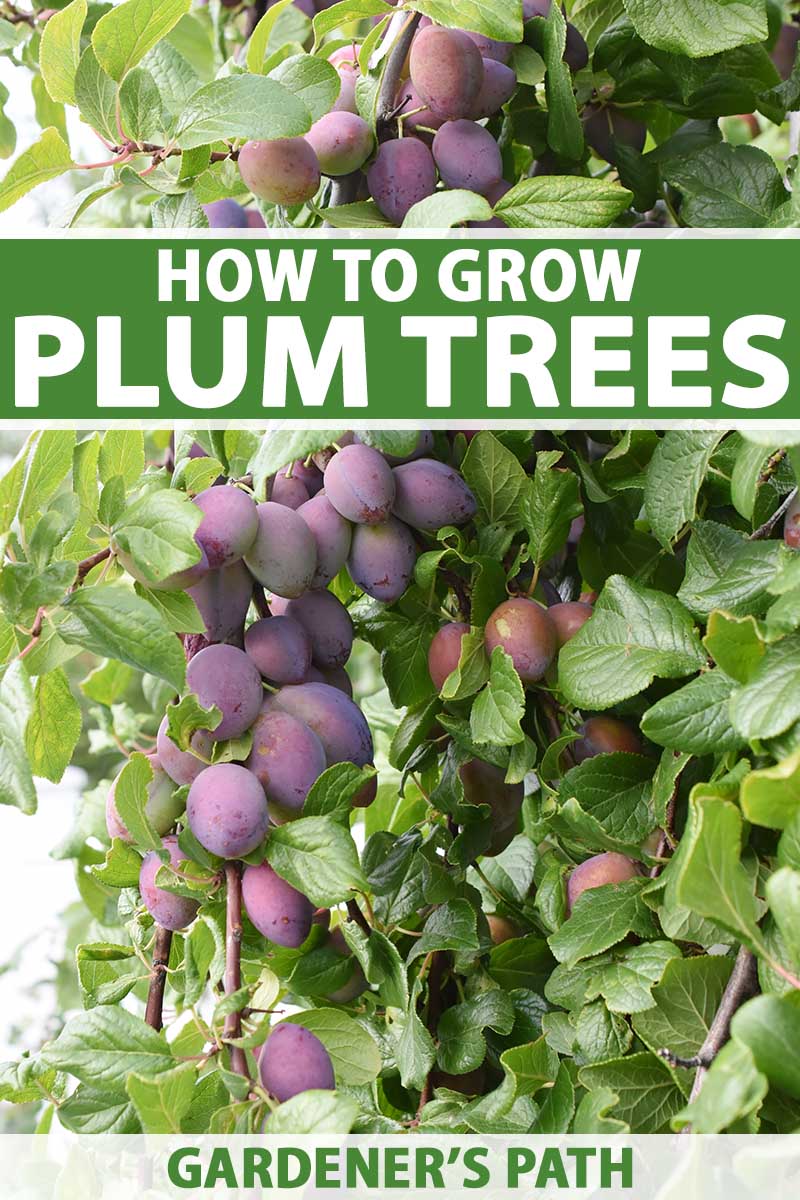
To help you raise bushels and bushel of flavorful fruits , here ’s what this scout will cover :
What You’ll Learn
Plums are broadly categorise as either Asian ( P. salicina ) , European ( P. domesticaandP. cerasifera ) , or hybrid .
Some people total North American indigenous type , likeP. americana , P. nigra , P.angustifolia , andP. maritima , to the premix .
The pruning requirements differ slightly depend on which type you ’ve got , but growing each of these is otherwise standardised .

Most plum are n’t self - fruitful , and this is where the coinage is significant . A European plum ca n’t pollinate an Asian one , so if you desire fruit , you unremarkably need to produce two cultivars of the same case . Do n’t occupy , we ’ll explain all that in a minute .
The exclusion are the few cultivars like ‘ A. U. Amber ’ and ‘ Methley , ’ which are self - fruitful – so do n’t give up your plum tree ambition if you only have room for one Sir Herbert Beerbohm Tree .
Cultivation and History
P. domesticaoriginated near the Caucasus Mountains and has in all probability been in finish for nearly 2,000 years . Ancient Romans cultivated the trees in their gardens .
Plums were bit by bit brought by settler from western Asia to Europe and eventually North America .
Our earliest record book of prune in the part derive from Prince Nursery , which was established in Flushing , New York , in 1737 . In their 1771 catalogue , they advertised 33 unlike plum for sales event .

Asian or Japanese plum tree , which originated in China along the Yangtze River Basin , were inaugurate into Japan and later South Africa , the Philippines , the West Indies , and Australia . They reached North America in the 1800s .
These days , the huge majority of plum tree grown commercially in the US are found in California , but they can grow in pretty much every state , in USDA geographical zone 4 through 9 .
There are also ornamental plum tree mintage that are grown for their extravagant spring video display . They will produce small fruits , which are technically edible , but they have magnanimous infernal region and only a slight chip of flesh .

We ’re choke to focus on the edible single in this guide .
Plum Tree Propagation
You call for to plan forward when planting plum tree . The dirt pH should be around 6.0 to 6.5 , and if it is n’t , you ’ll want to initiate adjust the pH the year before you plant .
Test your soilwell in the lead of planting .
It ’s entirely potential togrow a plum tree from the seedthat you ’ll find inside the center of the pit . However , this works best with native species rather than European or Japanese type .

That ’s because European and Nipponese types are less potential to produce fruit , or to produce fruit that is like to the yield that you amaze the pit from .
Most of the fruit you get from the grocery store were n’t grown from seed , they were develop on plants that were transplant . That means there ’s a lot of unequalled DNA in there , and who knows what will bug out out on your new specimen .
Planting source is a fun natural process for the family , but it ’s not the manner to go if you are serious about propagating a productive tree .

From Cuttings
rootle a film editing is a skillful fashion to multiply a works that you fuck . Whereas seed propagation is irregular , a cutting will give you an exact ringer of the parent .
In the wintertime when the weather is dry and the tree is dormant , take a cut from a untested leg that ’s about the diam of a pencil . The cutting should be about six to 12 inch long .
Cut the floor at a 45 - degree angle . This help to cue you which side is down , stool it easier to slide the cutting into the stain , and increase the surface area .

Dip the end of the offset in rooting endocrine . you’re able to bound off this gradation , but it tends to improve root .
Rooting internal secretion powder is pretty cheap , and if you be after to take more cuttings in your gardening journey , it ’s worth having around .
Bonide Bontone II Rooting Hormone

Pick up Bontone II Rooting Powder in a 1.25 - apothecaries' ounce bottleat Arbico Organics .
lay the cutting in a six - column inch jackpot occupy with pot land so about a third of it is below the soil line .
Water the soil well and plaza in an expanse with brilliant indirect luminousness . Maintain soil moisture as needed .

Once the cutting starts to prepare newfangled growing , gradually move it to a cheery point outside , assuming there ’s no risk of frost .
inure it off first over the course of a calendar week , adding an hour of Lord’s Day exposure each day .
When there are at least four new parting , you may transfer your rooted cutting into the ground .

Transplanting Bare Roots
Plum tree diagram are often sold as unfinished root specimens .
If you buy a bare root specimen , when it arrives at your menage , unfold the software system and check to ensure the roots are still dampish . If they are n’t , summate water supply .
Keep your bare root in an area where it will stay cool , but not freezing and not red-hot , out of direct sun . Before planting , soak the roots in water for two to four hour .

When you ’re ready to transplant , follow the direction for planting a potted tree diagram as report below .
Transplanting Potted Nursery Plants
spot tree about 20 feet apart , calculate on the case and its mature size . Prepare the soil by comprehend three times as wide and about as deep as the container .
Work lots of well - molder compost into the turn up soil and bump off the plant from its container . softly twit apart and relax up the roots in the rootball .
lour the ascendent ball into the jam and fill in around it with the assorted soil . Water well to settle any air pockets , and add more soil if necessary .
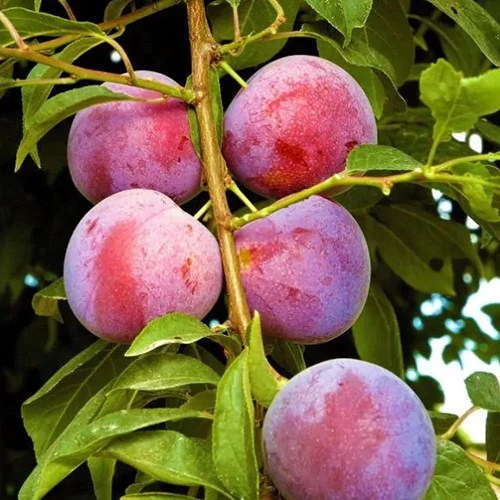
desolate roots can be diffuse over a mound of dirt in the fix .
Most modern plums , if they ’re not own - stem , are grafted onto peach or myrobalan ( P. cerasifera ) rootstock . The transplant should be sitting just above the soil line when you transfer .
body of water in your transplants . While older specimen are able-bodied to withstand some drouth , untested tree diagram ca n’t . They need regular and consistent water .

How to Grow Plum Trees
Location is passing important when site plum .
For instance , if you subsist in Zone 7 or below , avoid placing your tree diagram against a S - face concrete or brick wall .
The warmth reflected off the bulwark can further the tree to flower early , which leaves them exposed to blossom - killing frosts .

Ideally , you ’d plant on the upper area of a gentle gradient , but not all of us have such perfect conditions . You should void small - lying area , which incline to be colder and wetter than higher areas .
Most plums do well in full sun , but some can fruit even in partial Sunday . Plant your trees where they ’ll take in at least six hours of sunlight per day .
Young specimens should be kept moist , and the soil should n’t be allowed to dry out out at all . Older trees are more tolerant of dry condition because they develop an all-inclusive root system to get at piddle in the ground .

Add water during an extensive dry period of time or when the top three to four column inch of soil are wholly ironic . Do n’t waitress for the foliage to begin wilting before you reckon to add together water system .
By that dot , the tree diagram is already stressed , and this will make it more susceptible to pestilence and diseases .
Six months after planting , start your feeding routine . Give them a 10 - 10 - 10 NPK granular fertilizer spread equally inside the dripline . Water the granules in after covering .

The next year , feed in other springiness and again in late summertime . After the Sir Herbert Beerbohm Tree attain maturity , you do n’t require to fertilise unless you essay the land and find out it ’s extremely inferior .
However , heaping well - rotted compost around the Sir Herbert Beerbohm Tree but not touching the torso is always welcome .
When growing in alkaline soil , Prunusspecies are prostrate to chlorosis , making water and regular fecundation essential .

Keep sess aside from inside the trickle line . These can harbor cuss and disease pathogen and compete with the tree diagram for nutrient , especially when it ’s young .
In the event of a late blossom - killing hoarfrost , there generally is n’t much you’re able to do to protect your trees .
However , if you have just one or two trees and you have some of the former incandescent Christmas lights , you’re able to wind them in these and turn them on during cold-blooded nights to protect the blossom .

fluorescent fixture bulbs wo n’t work , however , since they do n’t generate as much high temperature .
So long as the blossoms are n’t killed off by frost that class , you should start seeing fruit about three years after transplanting .
Speaking of fruiting , these trees are reliant on pollinator to produce yield .

Because they flower for such a short period in the natural spring , if you have an passing slopped or windy period while they ’re in bloom , take flight pollinators like bees might not be able-bodied to do their job .
If that happens , you might not get any fruit that class or the crop will be much humble than normal .
As with all stone fruits , plums call for a certain number of gelidity hours to create a harvest . pall hour are when the temperature is between 32 and 45 ° F during the sleeping season .

broadly speaking speaking , European plums need about 400 shiver hr while Japanese change necessitate over 700 .
North American native types usually need few chill hour , and some hardly take any at all . Chickasaw plums , for example , only need about 200 pall hours .
Growing Tips
Pruning and Maintenance
Plums want special pruning to keep them rich and to ward off disease .
European plums should be trim into a central leader physical body and they do n’t need strong-growing pruning once they ’re old .
Japanese salmagundi are pruned into a vase shape and require more pruning .

American type do n’t demand to be shaped , though you should remove about a fifth part of the older branches each class to encourage youthful growth .
Whatever variety you ’re raise , always remove any dead , diseased , or deformed branches when you see them .
For tips on how to prune plum , check out our pathfinder .

European and Japanese typesshould be thinnedjust after the fruit form . You should depart one fruit spaced every four column inch .
Another important and often draw a blank part of plum tree maintenance is get rid of the fallen yield . Not only does this fallen material have the potential to harbor pests and pathogens , but it can make a slimy hatful that presents a slipping risk .
Also , accept in mind that rats roll in the hay fallen fruit . If you do n’t houseclean it up in the fall , you are bid rodents into your yard ( and potentially your nursing home ) .
Plum Tree Species and Cultivars to Select
European types tend to have a vase shape and produce sugared fruits .
Almost any European type can be used to pollinate another European character , and these all bloom a week or two after Asiatic and American types .
Japanese case have a more round , open form , and they give rise larger fruits . Pretty much any American or Nipponese type can be used as a pollinator for a Nipponese species .
American type lean to be more shrub - like and these are the fearless of the three , capable to hold up colder experimental condition . The fruits are also the smallest .
Most American character available for sale are hybridized with a Nipponese Sir Herbert Beerbohm Tree , though you’re able to notice a few non - intercrossed cultivar .
Not sure what type to plant ? Take a feeling at these recommend varieties :
American
While they can alter in size , most American plum grow to about 20 feet tall and produce heaps of small , one - in fruit .
These fruit are n’t as sweet or juicy as those of other species , but they ’re delicious nonetheless . If you like making fruit leather or fix , they ’re a antic option .
Many masses just originate them for their ornamental value . They produce hoi polloi of showy blossoms that blanket the tree in the early spring and they smell heavenly .
The crimson - purple fruits are a colorful addition to the yard even if you do n’t eat them . And do n’t care – quail , turkeys , and lots of other wildlife will snack on the fruit for you .
These trees will air out suckers and spread , which may be take a good or a bad thing , depending on how you await at it . As a bonus , native plum are ego - fruitful , so you only need one .
But why not plant several ? you could find these useable as multi - stem bush or single - base tree , depending on your need .
They make effective windbreaks , and can fill in intriguing areas that other Sir Herbert Beerbohm Tree wo n’t thrive in .
Look for cultivar such as ‘ Pipestone , ’ ‘ Toka , ’ and ‘ Underwood , ’ which have larger yield and a more telling flowered display than the coinage .
American Plum
Or you’re able to go for the older reliable mintage flora , which is beautiful , bad , hardy , drought broad , and will accommodate to most land conditions in Zones 3 through 9 .
Sold?Head to Nature Hills Nurseryfor a two- to three - foot bleak antecedent or a live tree in a # 5 container .
Brooks
My grandparents ’ home base was surrounded by plums , and ‘ creek ’ was always my favorite .
The blue fruit of this Italian plum sportsman is sweet with a sourish snap fastener to the skin when it ’s young , though left to mature , it becomes a sugary delight . And the jaundiced flesh is politic and flavorful .
No shade on Italian plums , but ‘ Brooks ’ fruit matures a few workweek before that of the parent character , and it ’s just a touch more flavorful .
‘ Brooks ’
This tree is hardy in geographical zone 5 through 9 , and grows to a manageable 15 feet grandiloquent .
You have to give this one a try ! If you agree , visit Nature Hills Nurseryto purchase a unrecorded plant in a # 3 container .
Burgundy
This Nipponese cultivar grows bushel of nigh shameful - skinned plum encasing a spicy , parentage - red interior .
The pit is particularly small , meaning there ’s more of that sweet figure for the taking . Plus , it ’s pretty cold - hardy for an Asiatic character , able-bodied to grow in Zones 5 through 8 .
‘ Burgundy ’
harvest is also easy on this tree because it does n’t grow much taller than 15 feet .
flying get Tree carrieslive plants in three- to four- or four- to five - foot summit .
Hollywood
P. cerasifera‘Hollywood ’ is ready for its turn on the microscope stage . Not only is it beautiful , with deep purple foliage , but the rich and sweet fruit are fantastic .
This dwarf character grow to about 15 feet marvellous and is as useful as an ornamental as it is a yield Sir Herbert Beerbohm Tree . The masses of pink blossoms that appear in the spring are well deserving having around .
‘ Hollywood ’
Hardy in zone 5 to 9 , it’savailable at dissolute Growing Treesin three- to four- , four- to five- , and five- to six - foot heights .
Methley
spate of masses pick 25 - foot - magniloquent ‘ Methley ’ because it ’s self - fruitful , so you do n’t need to have more than one plum tree to produce a harvest time .
But it ’s in reality one of the most generative plum cultivar out there . And you may pair it with a acquaintance for even more fruit !
This Japanese cultivar is disease - resistant , can stick out drought , and will fruit even in partial sun . The branch are extremely warm and are able-bodied to support laboured yield production .
‘ Methley ’
These trees need extra spacing because they tend to spread . Do n’t worry , they ’ll pay you back tenfold with plenty of fruit in commutation for their greedy nature .
Snag a four- to five - understructure live specimen in a composition potat Nature Hills Nurseryfor growing in Zones 4 through 9 .
Managing Pests and Disease
It seems like all Oliver Stone fruits have a reputation for brook from a lot of common pests and diseases .
While plums are no elision , they may be a little sturdier than their apple and peach friends . Still , there are many publication to find out out for . These are the most common :
Herbivores
Rabbits , mice , anddeerwill all exhaust the bark of these trees .
It ’s not usually a problem on older specimens which can withstand a piffling wrong , but with younger trees , a deer could devour an entire industrial plant in a dark or two .
Fencing is your dear option to protect young tree , whether you place small fences around the individual itself or fence off the entire plantation . you’re able to also set traps to trance mice , though they cause far less damage than larger critter .
When yield is present , shuttle , squirrels , and other herbivore wo n’t waver to feed in on your yield buffet .
They wo n’t typically eat enough to make much of a dispute , but it ’s something worth being aware of . If you really want to protect your fruit , use clear .
Insects
It should n’t total as a surprisal that North American native types of plums do n’t attract most of these plague as readily as non - native specie .
No matter which metal money of plum you grow , it ’s always a good idea to place traps around your orchard or individual fruit trees in gild to place pesterer before they become a serious problem .
Pheromone traps , gummy traps , and elementary observation can all assist you to reckon out if pests are eyeballing your trees .
Aphidsandscale insectswill attack plum , but they rarely cause serious problems and can normally just be ignored .
Cultivating a level-headed garden environment filled with circumstances ofbeneficial insectsis the best agency to tackle these type of pests .
avert using pesticides when the flowers are present unless they ’re targeted , because you hunt the jeopardy of killing pollinators like bees . You should also avoid spraying in the few week leading up to harvest .
If your pest problems become too egregious and you should be forced to spray , we have tips here .
The following are the most common pests that you may come up across when growing plum :
Depending on where you survive , Malus pumila maggots ( Rhagoletis pomonella ) are mostly a problem on of late - mature types like ‘ President ’ or ‘ Valor . ’
Plums that mature during the summertime wo n’t be infested by apple maggots because the timing of the life sentence cycle of the pest and the fruit ripening do n’t concur .
But when the timing is right , apple maggot can be the most damaging pest you ’ll come across .
intimately related to cherry fruit flies , apple maggots look like tiny house flies with white banding . It ’s not the adults that you have to worry about , though – it ’s the larva , which come out after the grownup flies lay eggs under the skin of the fruit .
When the maggots emerge they lead off eat their way through the fruit , give telltale tunnels behind . These tunnels start out to rot , and over time , the total fruit rot and falls from the tree .
Control involves taking an integrated approach involving organic pesticides and trapping . Read our scout to learn all about integrated plague management .
I do n’t know why , but the name plum curculio ( Conotrachelus nenuphar ) vocalize like some cute small critter to me .
perchance it ’s because , living west of the Rockies , I ’ve never had to plow with this problem in the past . But I will tell you there ’s actually nothing cunning about plum tree curculios .
These nozzle - nosed beetles are perfectly devastating for apples and peaches , and while they ’re less of a problem in plums , an plague is still no paseo in the park . The quarter - inch - long beetles are dark dark-brown with dappled gray and white patches .
The adult female lay egg in the skin of the yield where the larvae hatch and lead off devouring the build inside .
The fruit falls to the soil , the maggots dig into the land to pupate , and the living cycle stay on .
get going watching for these pests a few weeks after the efflorescence evanesce on your trees . you could set out viscous traps to capture them .
Pyrethroids can be used to kill the grownup and neonicotinoids may be applied to down the larva , but these sorting of broad spectrum pesticides can induce more harm than adept .
They can wipe out good insects and upset the concordance in your garden – no judgment though if you ’ve got ta do what you got ta do .
rather , I recommend that gardener try a multipronged overture . head up out in the early morning and shake your plum tree trees .
I bang it vocalise weird , but if you set tarps underneath them , the beetles will cast and you could scoop up them up and toss out of them in soapy water system .
You should also always scavenge up any fallen fruit as well , because that ’s where the larvae subsist .
BotaniGard ES
Then , put on a product that hold in the beneficial fungusBeauveria bassiana , like BotaniGard ES . It’savailable at Arbico Organicsin quart or gallon container .
This product may be used to manage a range of flabby - incarnate insects . It wo n’t kill adults , but it will kill the larva .
There are several species of root - Calidris canutus nematode that round plum tree tree , includingMeloidogyne incognitaandM. javanica .
Peach radical - knot nematodes ( M. floridensis ) , another species that may overrun plums , were first key out in Florida , but they have since been found throughout the United States .
These microscopical worms can infect all members of thePrunusgenus , and other host beyond that .
They cause bulblike nautical mile - comparable growths call galls on the antecedent that reduce the amount of piddle and nutrient the tree can access , resulting in diminished and stunted growth .
While an old tree diagram can usually last an plague , though it will suffer reduced heartiness , younger one are more susceptible and will more than likely die .
While there are thing you’re able to do to address the problem , I ’m not going to lie , the mindset is n’t great . We have a scout to root - gnarl nematode worm to walk you through what you require to know .
Tree bore bit are moths that lay nut in the bark ofPrunustrees . There are three main species that attempt plums : the peach tree bore bit ( Synanthedon exitiosa ) , the less peach tree borer ( S. pictipes ) , and the plum tree borer ( Euzophera semifuneralis ) .
Both types of peach Sir Herbert Beerbohm Tree borers are busy laying eggs during the summertime while the plum tree stone drill can lay nut in the later spring and tardy summertime .
The adult moth search for spots on the tree diagram where the barque has been damaged , and when they observe a berth they lie in their egg there .
As the larvae emerge they tunnel through the tree . This can cause girdling , and exposes the tree to other types of pests and disease .
Peach tree rock drill look a little bit like wasp . They are black and red with clear flank , while the less peach tree borers are pitch-dark and white with clear wings . Plum stone drill look more like a traditional moth , with brown , gray , and cream coloring .
This is where using pheromone traps hail in ready to hand . If you place cakehole near your trees , you could monitor population and know when it ’s time to get to work .
you’re able to also be fair sure-footed that the pests are present if you see sap ooze out of the bark , and frass , which look like sawdust .
deny the moth a lieu to lay their eggs is the first step in forbid an infestation . You need to do everything you may to stave off damaging your trees , so prune carefully .
Do n’t ever nail down anything into a Sir Herbert Beerbohm Tree , and use caution when trimming near the root . You should also endeavor to keep herbivores away from your trees .
Learn more about place and controlling plum tree Sir Herbert Beerbohm Tree pest .
Disease
It ’s not unheard of for plum tree tree diagram to be infected with Armillaria or summit rot , but these disease are not nearly as common as the followers :
sinister knot is a springtime disease get by the fungusDibotyron morbosum(syn . Apiosporina morbosa ) .
It thrives in showery , cool atmospheric condition and it can be exceedingly problematic on plum trees . Nipponese and American species are less susceptible than European motley .
This disease only happens when water is present and temperature are between 55 and 75 ° atomic number 9 .
As the novel shoot emerge in the spring , they ’ll exhibit strange conceited field that are pale fleeceable . After a year , these swollen surface area will eventually work into warty , elongated , black - knotted masses .
It ’s not just ugly – the masses take over woody area on the tree and reduce production and vigor .
If you ’ve had mordant knot in your orchard recently , a product that contains chlorothalonil is extremely effective at prevent disease spread when applied in the early spring .
It ’s also good at control black knot , but no fungicide will extinguish the disease entirely .
Bonide Fung - onil
Try Bonide ’s Fung - onil , which isavailable from Amazonin 16 - ounce containers .
now pruning off any infected branches can also help to curb banquet .
Or , just prefer to plant ‘ Obilinaja , ’ ‘ former Italian Green , ’ ‘ smoke , ’ ‘ Fellenberg , ’ or ‘ President . ’ They ’re all so resistant to this fungus , they ’re basically immune .
Brown decomposition is a common foeman for peach growers , but it can bring down plum as well . It ’s not as problematic in these plants , set on less frequently and causing less equipment casualty .
European plums are more susceptible than other specie , and trees develop in wet , warm areas are the most susceptible . When it ’s present , the fungus will locomote on lead and water .
This disease is due to the fungusMonilia fruiticolaand it just have it off mummify yield .
Do n’t leave any rotten , dead yield on your Sir Herbert Beerbohm Tree , and it will go a long way toward avoid this issue . The fungus is also spread by pests , so debar plague also help .
If a tree is infect , the peak will turn brownish and soggy , and the bakshish of the branches will die back . You ’ll also see pestilence on the tree .
When the yield develops , it will have chocolate-brown staining and will quickly molder . This can literally happen over the course of a twenty-four hours . The yield might mummify and rest on the tree or fall to the ground .
The fungus that stimulate this disease overwinters on this mummify yield , which is why it ’s so important to clean it up in the winter .
Silver leafage is an implausibly common and contractable fungal disease caused byChondrostereum purpureum , the spores of which travel and propagate on water .
It impactspears , cerise , apple , elm , oaks , maples , poplars , andwillows . But it ’s especially terrible on plums .
During showery or humid periods , it can spread apace . As it circulate throughout the tree , it limits the plant life ’s ability to transfer water and reduces vigor .
As the name involve , it causes the leaves of the tree to turn silver . It ’s kind of pretty , and looks like someone bring a can of spray paint to your trees .
You ’ll also see a darkening of the arm from the fungal structure overspread there .
Before you start seeing silvering , the tip of young branch will begin to die back , but people often miss or misdiagnose this symptom .
This silver is n’t really glazed . The pathogen just changes the manner that the leaf reverberate light .
If only a few branches are infect , prune them off when the weather is dry . If the disease starts to bear on more than one-half of the tree , you ’ll ask to remove and incline of it .
Avoiding silver leafage takes some planning , but it can be done . The fungus demand to find a wound or opening to taint the plant .
If you take carefulness around your tree diagram when you ’re trim back weeds , do your best to foreclose infestations by forest - rust insects , and never prune during wet atmospheric condition , chances are proficient you’re able to avoid it .
Plum Fruit Harvesting
fruit are mature sometime in the late summertime or early gloaming . It all look on what specific plum tree you ’re growing and whatUSDA Hardiness Zoneyou’re in .
‘ Early Golden ’ might mature in early July if you ’re in a mild climate , while ‘ Valor ’ wo n’t be quick until mid - October in areas with short growing season .
You ’ll usually get around three bushel from American trees , and up to five from European and Japanese type .
In my folk , harvesting aim place via child proletariat . My gran pay my mama a cent a plum and my mamma pay me and my siblings a nickel per yield .
I do n’t acknowledge what the pop off rate is today , but round up the kids and promise them plum kuchen ( zwetschgenkuchen ) in requital for their attempt . It ’s beneficial than cash .
The yield should come by easily when they ’re ready . The prosperous way to recite if it ’s time is to find fault one and take a bite . Does it taste good ? Harvest away !
Preserving Plums
Plums wo n’t last long off the tree . To prolong their ledge life , do n’t lave them until you ’re ready to corrode them . Keep them in the icebox crisper drawer and they ’ll last for up to a calendar week .
To make them last longer , dry them in a dehydrator – hello , prune ! Or you’re able to make fruit leather or electronic jamming , or can them in sirup .
you may also freeze plum tree by chop them and then freezing the pieces on a baking sheet so they do n’t stick together .
Once they ’re frozen , you may jactitate them in a big bag and varnish them up . They will rest fresh for about six calendar month .
Recipes and Cooking Ideas
Plums are my absolute preferent fruit for make desserts . They have just enough acidulent dynamism to add a tangy note to contrast with all that sugar .
You absolutely ca n’t go unseasonable with a galette . If you do n’t already have a favored recipe , our sister website Foodalhas you covered .
If you ’re planning to go on a hike with the fam , bring plum hand pies along as a treat . Start withFoodal ’s recipeand employ your homegrown plums .
Or turn over them into a gay cocktail withFoodal’ssugar plum recipe .
If you miss a sweet tooth like I do , plum tree are also excellent as a topping for chicken or pork barrel .
My favorite way to use them is to hack them up withtomatoes , cilantro , onions , a credit crunch of calcium hydroxide , andchilisto make a fruit salsa .
Quick Reference Growing Guide
When the Plum Tree Blooms, the Entire World Blooms
Plums are idealistic for the tiro because they ’re adaptable and able to tolerate some neglect .
The fresh fruit are better than anything you ’ll regain in the entrepot and you could grow eccentric that you ’d never otherwise come across .
Even if you only have a small spot uncommitted in the garden , you’re able to have plums .
There arelots more yield trees to savor , and if this pathfinder gave you the entropy you needed to start with plums , you might find these helpful :
© Ask the Experts , LLC . ALL RIGHTS RESERVED.See our TOSfor more details . Product photo via Arbico Organics , Bonide , FastGrowingTrees.com , and Nature Hills Nursery . Uncredited picture : Shutterstock .
About
Kristine Lofgren
